Showing posts with label Geology. Show all posts

Sunday, 29 January 2017

Harvard's Natural History Museum

I've done the Fossils event and currently am doing the Rocks and Minerals even for Science Olympiad. As a (self-proclaimed) expert on these topics, I've visited several natural history museums, including the LA Natural History Museum, which is absolutely incredible, and the London Natural History Museum, which is stunning. But I have to say that, for its size and collection, Harvard University's Natural History Museum is surprisingly wonderful.

The array of specimens at Harvard is amazing for a place less than half the size of the LA or London museums. Every single rock or mineral specimen, every single fossil that I had to know (and more!); Harvard had it all. And not only were the specimens present, but they were also in top condition. There is, of course, also the world's only exhibit of realistic glass flowers.

This last time I went, just about a week ago, I was still awed by everything that I had seen on a previous trip. It's definitely a place that everyone, especially if you're interested in geology, should take a trip to.

Wednesday, 25 June 2014

Methods of Fossilization

Sorry for not posting anything for so long! Now we're completely switching gears.

This time I'll be talking about methods of fossilization. Before that, though, I need to tell you some of the conditions for fossilization. It is very difficult for an organism to become fossilized, because the conditions are so specific.

Conditions for Fossilization:
1. Conditions are mild.
2. Composition of the organism is suitable for fossilization (usually hard parts, but not always).
3. Remains of the organism are buried quickly.

These are just some, not all of the conditions, but they will suffice for now.

The Methods of Fossilization:

Common Modes-
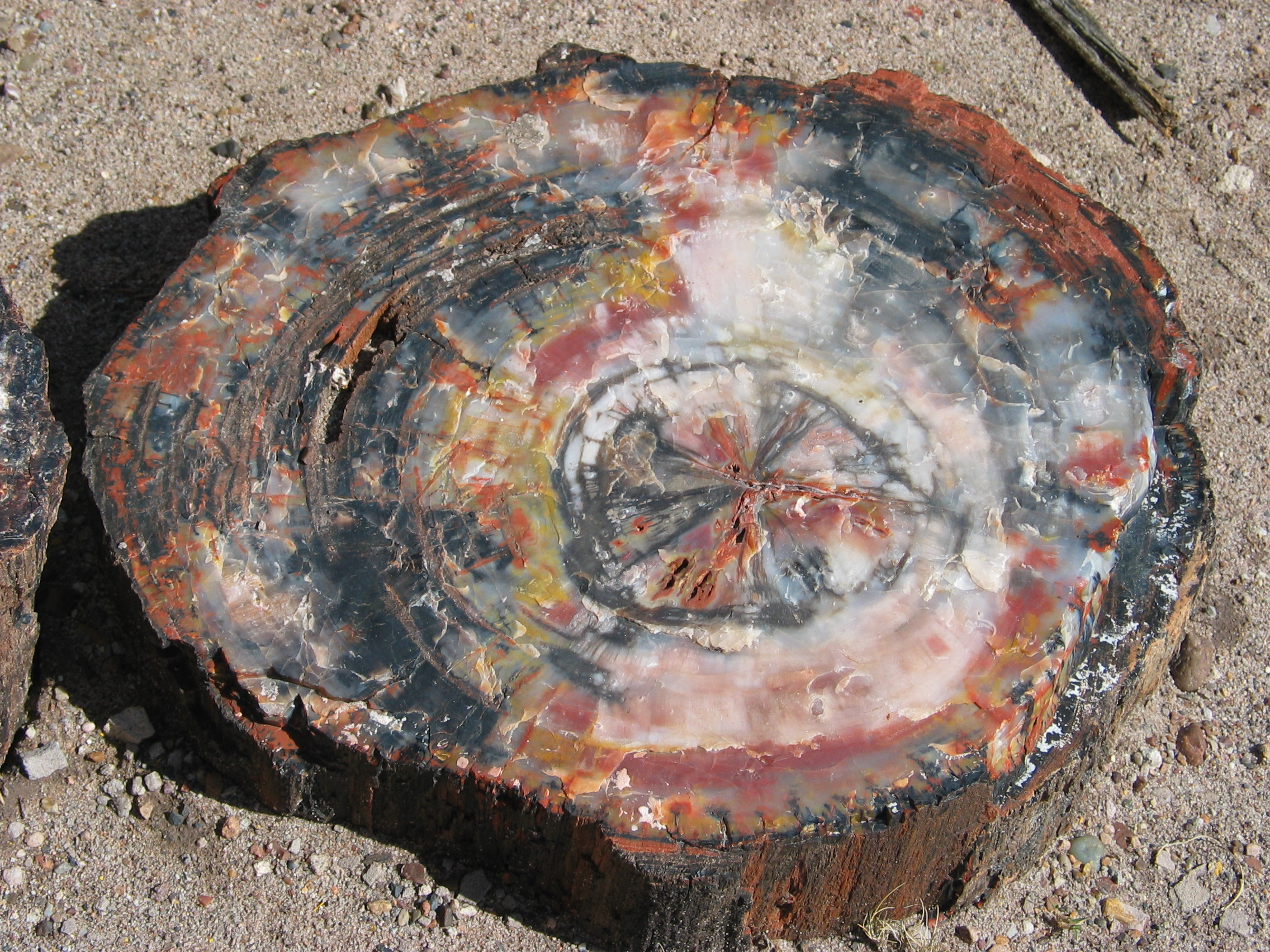
1. Permineralization: Minerals from a solution fill into pores in wood, shell, or bone that eventually harden. A specific form of this is petrification where organic matter is replaced by minerals and eventually turns to stone. A well-known example of this is petrified wood.


2. Mold: Imprints of an organism in rock.
    Cast: A replica of the original organism when the mold is filled with sediments or minerals. This is relatively uncommon.


3. Carbonization: Usually fossilizes plants and soft-bodied animals. Organisms fossilized as a carbon film in sediment.
May show great detail.


4. Actual Remains: Is what it sounds like. Organism's original body somehow survives.


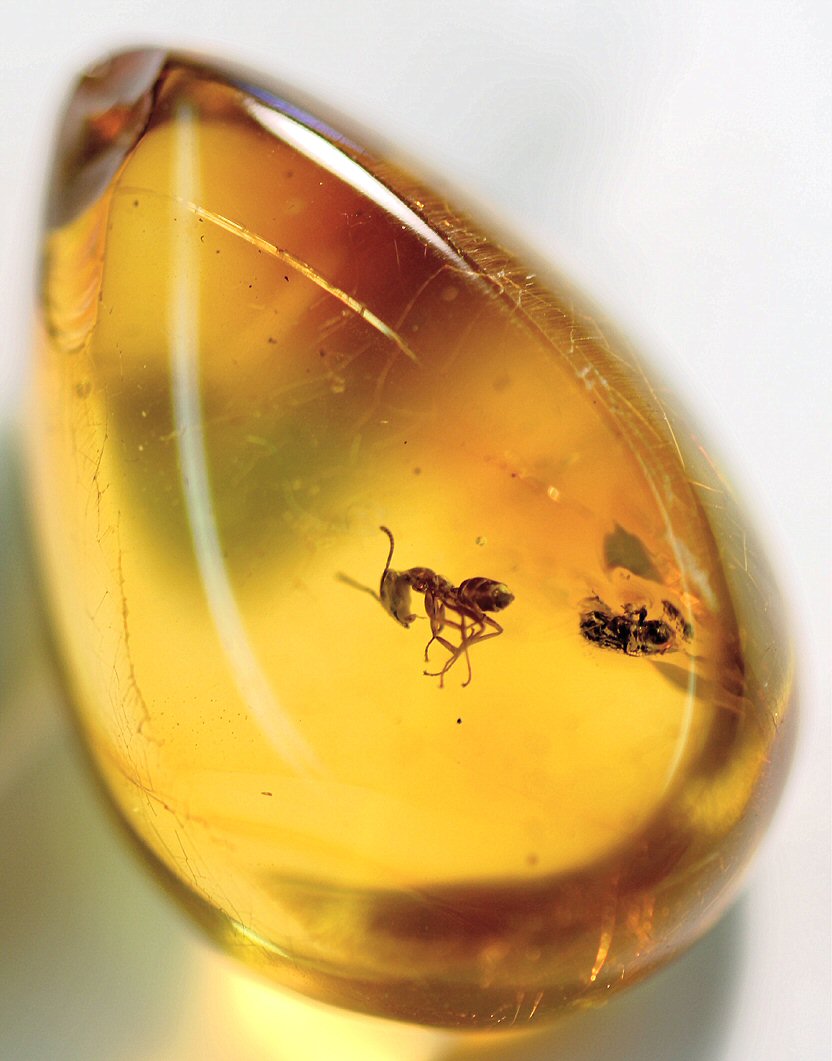
5. Amber/Copal: Organism is trapped in pine resin which turns into amber. Soft parts are fossilized.


6. Mummification: Just as it sounds. An organism is mummified in natural conditions.


7. Freezing: One thing that may cause mummification. Organism is frozen and preserved.


8. Entrapment in tar/asphalt: Organisms are trapped in tar or asphalt and preserved.


These are, of course, not all of the methods of fossilization, but some of the most common. The processes described here also take a very long time.